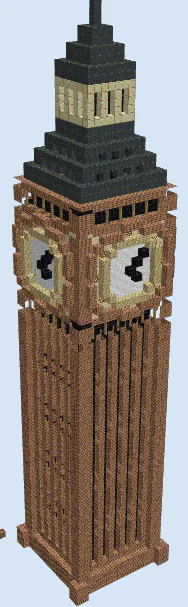
What you are building
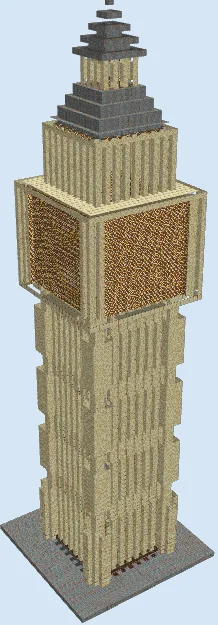
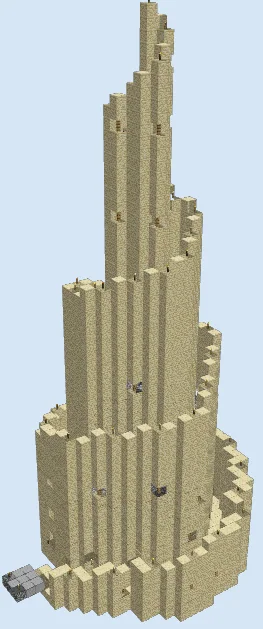
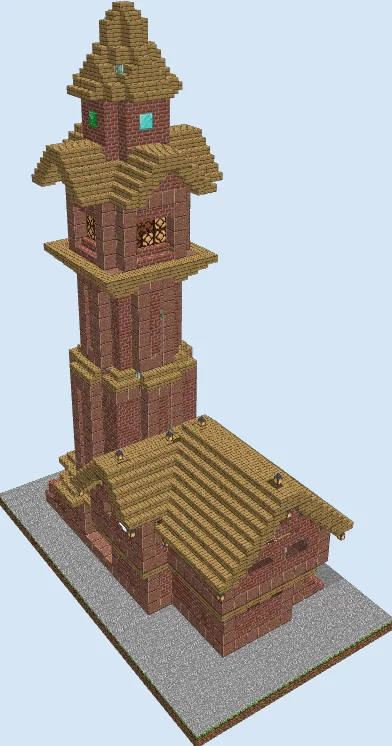
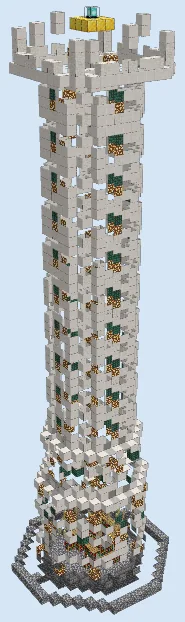
Standing a massive one hundred blocks tall, this monumental clock tower captures the timeless elegance of London's Elizabeth Tower. Vertical pilasters carved from Jungle Planks flank each face to create dramatic shadow lines, leading the eye upward to four grand clock faces framed in crisp Cut Sandstone and topped with a steep, tiered belfry spire.
This build serves as an unforgettable centerpiece for a sprawling Victorian city, a coastal harbor harborfront, or a grand capital plaza. Because of its sheer height and clean architectural lines, it can also double as a functioning central navigation landmark for any large survival world.
Materials 4,676 blocks · 12 types
- Jungle Planks2,18634 stacks + 10
- Black Wool1,05416 stacks + 30
- Gray Wool3705 stacks + 50
- Cut Sandstone3565 stacks + 36
- Dark Oak Slab2594 stacks + 3
- White Wool1802 stacks + 52
- Oak Fence961 stack + 32
- Birch Planks961 stack + 32
- Jungle Slab45
- Glowstone32
- Dirt1
- Light Gray Wool1
Block palette
Warm Jungle Planks make up the bulk of the tower's facade, lending it the distinct sandstone-and-timber tone of historical Gothic revival architecture. Crisp Cut Sandstone outlines the decorative clock surrounds, while high-contrast White Wool and Black Wool give the dials and clock hands clean visibility from hundreds of blocks away.
If you prefer a pure masonry aesthetic, you can easily substitute the Jungle Planks for Mud Bricks or traditional Bricks without changing the underlying geometry. The wool dial face can also be swapped with Sea Lanterns or Quartz Blocks for a gleaming illuminated look.
Establish the flared base and core
Layers 1–12 of 82Begin by laying out the 21 by 24 block footprint, stepping out slightly at each corner to construct the reinforced base plinths using Jungle Planks. Build up the outer sill using stacked planks and horizontal trims to give the base a heavy, grounded presence.
Start pulling the vertical fluted pilasters upward from the plinths, leaving one-block recessed channels between each pillar. Fill the inner core with Black Wool to create an impenetrable dark shadow that emphasizes the vertical ribbing.

Raise the fluted tower shaft
Layers 13–34 of 82Continue carrying the vertical Jungle Planks pillars straight up toward layer 34. Keep the corner buttresses slightly thicker than the intermediate wall pilasters to maintain strong corner definition across all four sides.
Maintain the recessed gaps along each side and back them consistently with dark blocks to preserve the slender vertical lines that define Gothic tower architecture.

Frame and detail the clock faces
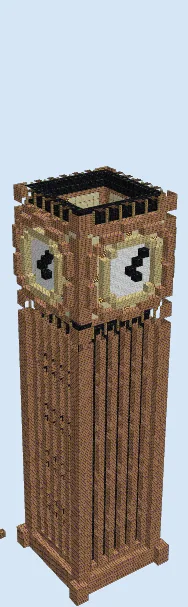
Layers 35–59 of 82Extend the shaft upward to layer 59 and expand the upper chamber slightly outward on small corbels. Construct the four circular dial frames using Cut Sandstone, filling each face with a field of White Wool.
Mount clock hands angled across the face using Black Wool to display the time. Frame the top of the clock section with an overhang of Jungle Planks and dark balcony openings along the upper frieze.
Erect the belfry and copper spire
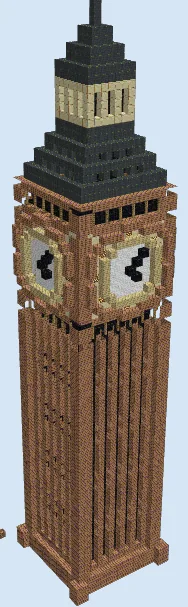
Layers 60–82 of 82Cap the clock chamber with an open belfry gallery, framing vertical acoustic louvers using Cut Sandstone pillars. Step the roof inward using tiers of Gray Wool and Dark Oak Slabs to form the lower pyramidal roof section.
Crown the belfry with an elevated lantern stage, then taper the dark wool blocks steeply upward into a slender spire topped with a pointed finial needle extending to layer 82.
Finishing touches
Surround the base with a polished cobblestone or stone brick plaza complete with iron lamp posts and decorative benches. Inside the clock room, embed Glowstone directly behind the white wool dials so the massive clock faces glow vibrantly across your world throughout the night.
Frequently Asked Questions
Can the clock faces be lit up at night?
Yes, swapping the interior backing blocks directly behind the White Wool dials with Glowstone, Sea Lanterns, or Froglights will make the clock face shine brightly in the dark.
Is the interior hollow enough for a base?
The core has plenty of vertical space that can be divided into multiple functional floors, including storage rooms, brewing stations, or an automated bell tower system using redstone.