What you are building
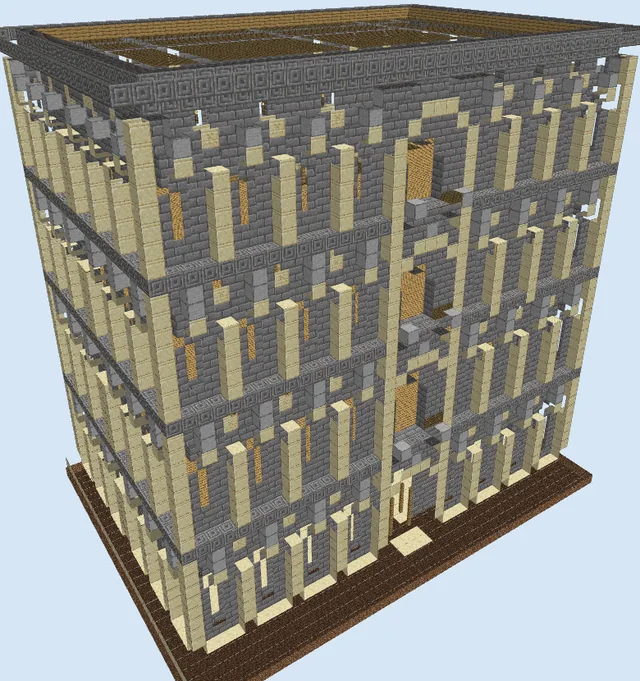
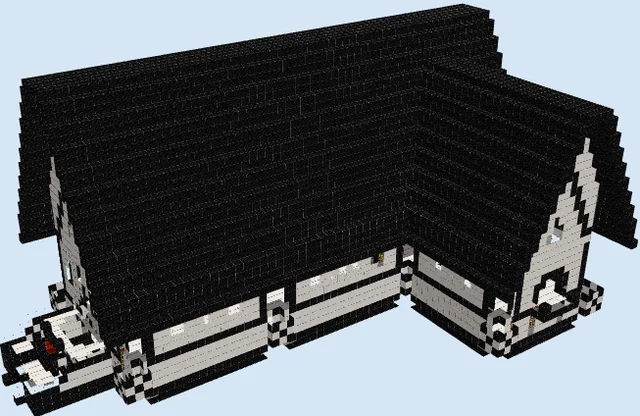
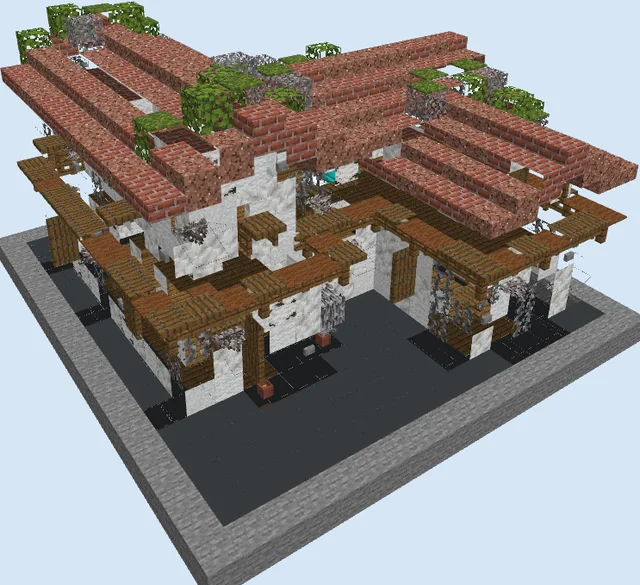
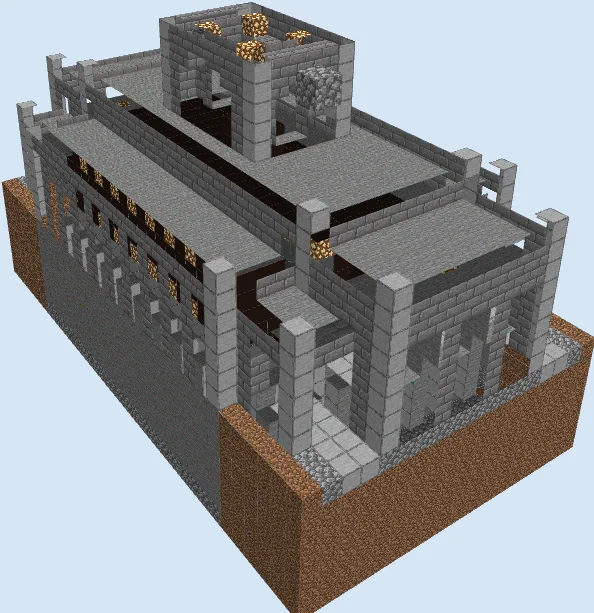
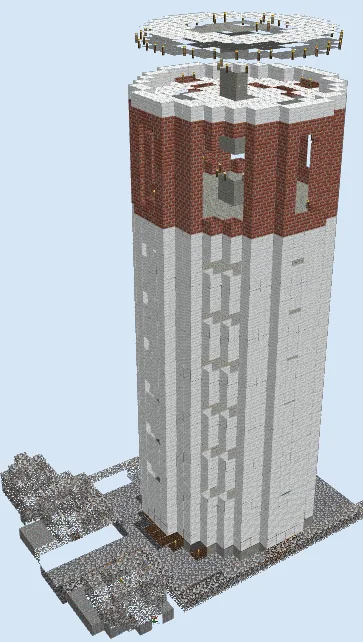
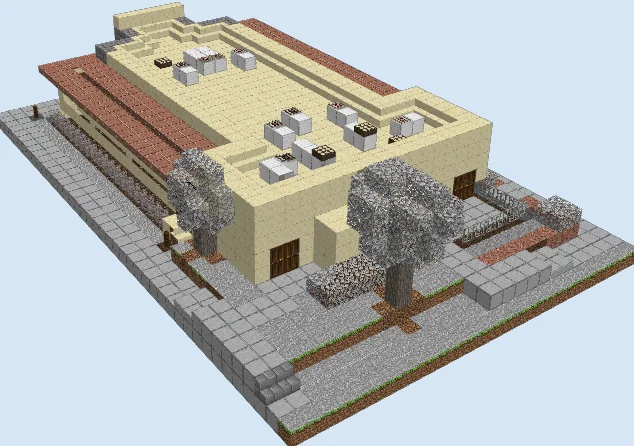
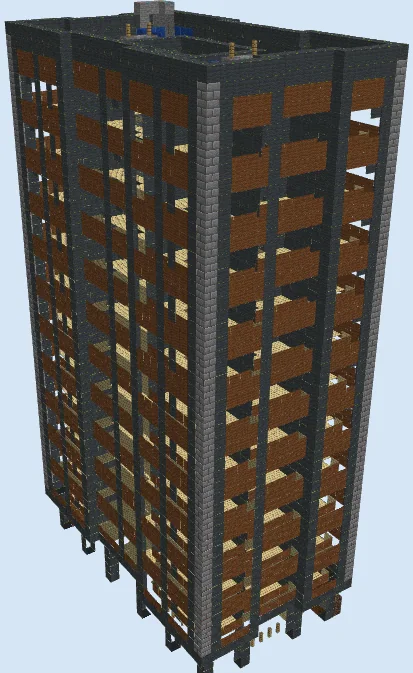
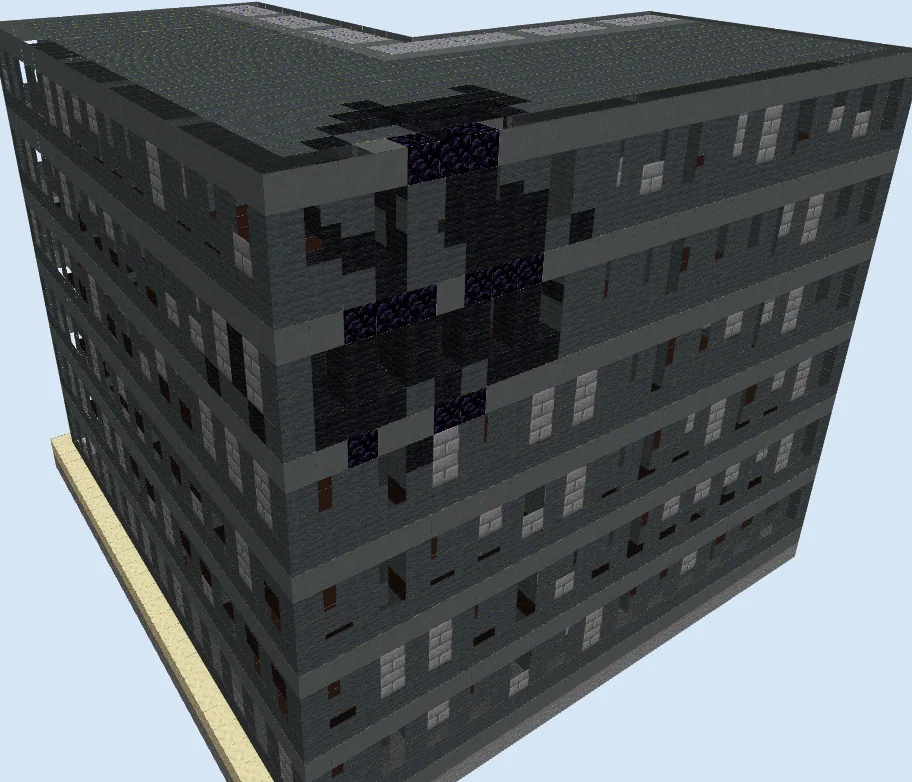
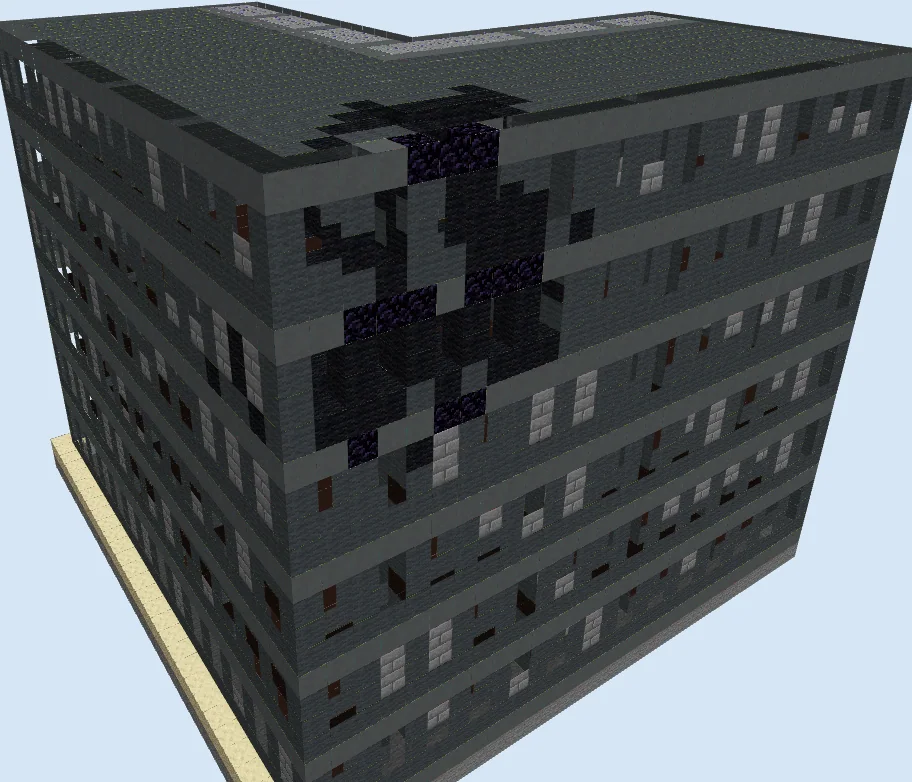
Standing tall with an imposing concrete-like silhouette, this urban apartment complex brings gritty modern realism into Minecraft. Designed with an L-shaped footprint wrapping around a rear parking area, the structure features multiple identical floors divided into modular living units, hallways, and windowed facades banded with contrasting tones.
The defining characteristic of this build is the massive scorched impact zone carving through the upper corner. It serves as an ideal centerpiece for post-apocalyptic survival maps, modern city roleplay worlds, or zombie apocalypse battlegrounds where players need a realistic, defensible fortress to scavenge and explore.
Hide Campfire blocks beneath the black wool and obsidian in the blast zone to produce rising smoke visible from across your city skyline.
Because large portions of the building use Gray Wool and Black Wool, ensure fire spread is disabled if you plan to incorporate real flames into the damaged section.
Materials 10,045 blocks · 20 types
- Gray Wool3,93761 stacks + 33
- Cyan Terracotta1,90429 stacks + 48
- Black Terracotta1,74327 stacks + 15
- Stone90014 stacks + 4
- Polished Andesite3785 stacks + 58
- Glass2914 stacks + 35
- Stone Bricks1732 stacks + 45
- Dark Oak Door1602 stacks + 32
- Black Stained Glass Pane1352 stacks + 7
- Black Wool1181 stack + 54
- Stone Slab1071 stack + 43
- Sandstone56
- Diorite45
- Spruce Door42
- Ladder23
- Obsidian15
- Stone Brick Slab6
- Black Stained Glass6
- Gray Stained Glass4
- Nether Brick Slab2
Block palette
The exterior relies heavily on Gray Wool and Cyan Terracotta to establish the weathered, monolithic feel of industrial concrete. Internal partition walls use clean Stone and Stone Bricks, while Diorite marks bright white stall lines in the parking courtyard.
For the blast crater, Black Terracotta, Black Wool, and Obsidian produce a convincing charred gradient. If wool is difficult to farm in large quantities, replace it with smooth basalt, deepslate, or gray concrete powder to achieve the same matte facade.
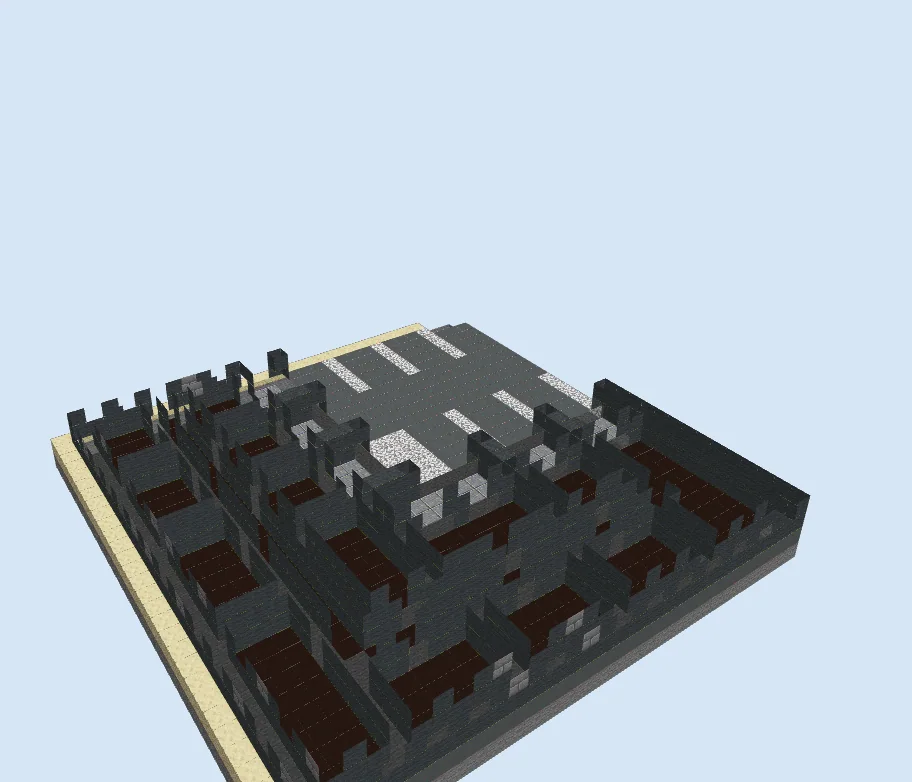
Outline the footprint and courtyard
Layers 1–4 of 26Lay down the L-shaped ground floor outline using Gray Wool and Stone. Fill in the open rear corner with a paved parking surface, embedding Diorite stripes to mark out parking bays.
Divide the ground level into individual apartment units and corridors. Install Dark Oak Door blocks at each unit entryway and begin raising the perimeter walls up to four blocks high.
Construct the lower residential floors
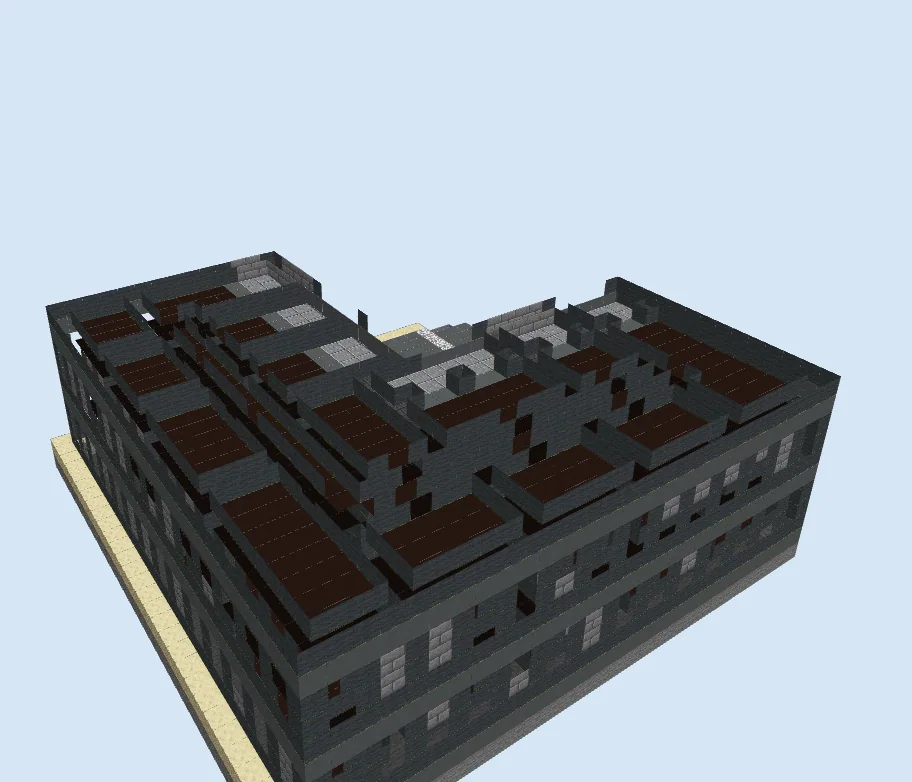
Layers 5–11 of 26Raise the external walls to layer 11, alternating bands of Cyan Terracotta and Gray Wool between floors to add structural definition. Carve two-block-high window openings along the outer walls.
Lay intermediate ceilings across each level using Stone and Polished Andesite, duplicating the room layout and door frames on each new floor.
Raise upper levels and shape the blast crater
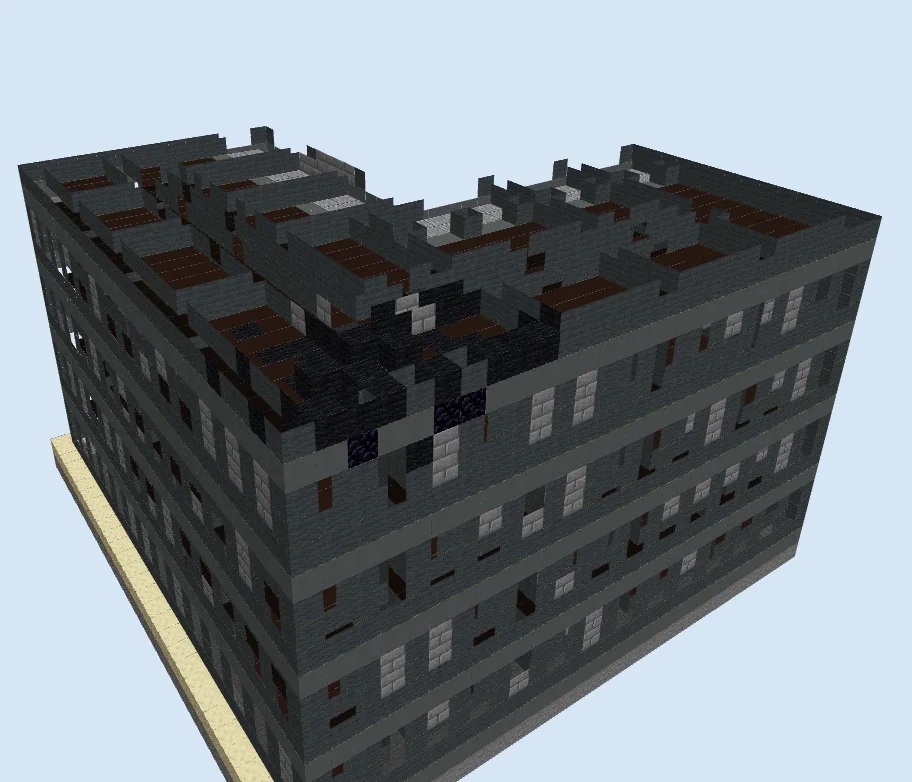
Layers 12–19 of 26Continue stacking floors upward toward layer 19, keeping the window spacing consistent along the undamaged wings. Inside, ensure stairwells or ladders connect each level through the central corridor.
On the prominent outer corner, cut out large sections of wall to depict structural collapse. Frame the irregular impact cavity using Black Terracotta, Black Wool, and reinforced Obsidian to create charred rubble.
Complete the roof and scorched breach
Layers 20–26 of 26Extend the remaining facade to full height at layer 26 and seal the top with a flat Polished Andesite roof bordered by a low parapet. Extend the scorched crater up through the roof deck, leaving an open crater edge.
Glaze the intact window frames with Glass and Black Stained Glass Pane blocks, intentionally omitting panes around the explosion crater to represent shattered windows.
Finishing touches
Bring the building to life by adding street lamps, dumpsters, and chain-link iron bar fences around the rear parking lot. Inside the scorched breach, place campfires under dark blocks to create lingering smoke plumes, and scatter cobblestone rubble, redstone dust wiring, and broken furniture throughout the damaged suites.
Frequently Asked Questions
Can players actually live in the apartments?
Yes, every floor is fully partitioned into separate rooms with hallway access, making it functional as a multiplayer base or villager hotel.
How can I repair the building for a clean modern city?
Simply mirror the window and wall pattern from the opposite side across the damaged corner, replacing all black materials with Gray Wool and Cyan Terracotta.